I thought I would write this text earlier, but let’s say that boxing news kept us busy:
the bill tabled by Enrico Ciccone, the Crawford–Mbilli–Sheeraz saga with the WBC, and of course the induction of our friend Russ Anber into the Hall of Fame… in short, a packed schedule, and a slight delay in my writing — apologies.
But it was absolutely necessary to come back to these senior national championships, especially after my discussions with three people who are currently shaping the Canadian program:
Vincent Auclair, head coach;
Ariane Fortin, two-time world champion, Olympian and coach;
and Samir El Mais, national coach and former member of the national team.
Their combined vision paints a clear picture: the program is moving, and it’s moving in the right direction.
A championship that confirms the progression of the Canadian system
For Vincent Auclair, these championships confirmed an encouraging trend:
depth is increasing, categories are getting deeper, and young athletes are emerging faster than before.
He also wanted to highlight an essential point: the human quality and commitment of the entire community.

Photo: IG – Vincent Auclair, wyatt Sanford, Tammara Thibeault, Samir El-Mais
“I want to congratulate all the participants, all the coaches, and everyone who contributed in any way to these championships. What we saw this week is a community pushing in the same direction.”
A message that reflects the spirit of the program well: rigor, yes, but also recognition and cohesion.
Thanks to the categorization system, several boxers per division can now be developed in parallel, each at a level of competition suited to them. It’s a smarter way to bring athletes up:
challenge without destroying, progress without skipping steps.
Samir El Mais’s analysis: technical precision and a boots-on-the-ground perspective
Samir El Mais confirms this overall impression:
“It was a very interesting national championship this year. A lot of new talent, both among women and men.”
He reviewed the performances of the 2025 champions, but above all, emphasized those who impressed him most.
On the women’s side: confirmations and revelations
• Marie Al-Ahmadieh (57 kg): Samir insists on her hand speed, international experience, and ability to make fights “easy” despite the level. Unanimous win in the final.
• Tamara Thibeault (75 kg): dominant as always.
• Nakhjiri, O’Callaghan, Bourdon, Monteglio: all new champions in their categories. Samir highlights the wave of renewal sweeping through the women’s team.

Photo: IG – Marie Al-Ahmadieh
On the men’s side: epic battles, real improvements
• Max Tomines (55 kg): for Samir, one of the men of the tournament.
“He beat very tough opponents, including former champion Karan Sembhi, then Alexis Turbide in the final. Resilience, real-time adjustments, boxing IQ… he showed he belongs at the top of the category.”
• Gabriel Aly-Labrie (65 kg): a “complete boxer, able to adjust and stay calm in a loaded division.” Loses the first round to Yacine Benaoudia, comes back strong to win the title.
• Vincent Santoriello (70 kg): former U23 champion, now elite champion. A real step forward.
• Ofori (80 kg): Samir notes he stopped two of his three opponents and won a very close fight against Umar Carcamo in the semifinal, highlighting Umar’s toughness and durability.
• Horcoff (+90 kg): a true tournament attraction.
“Even when counted, he kept coming back and pulling everyone into a war. The whole room on its feet.”
Samir still believes he would benefit from dropping to 90 kg… but his mental strength and style left a mark on the tournament.
Ariane Fortin’s perspective: styles, expertise… and recognition of work well done
Ariane Fortin’s point of view complements Samir’s perfectly, with emphasis on styles, technical evolution, and foundational work.
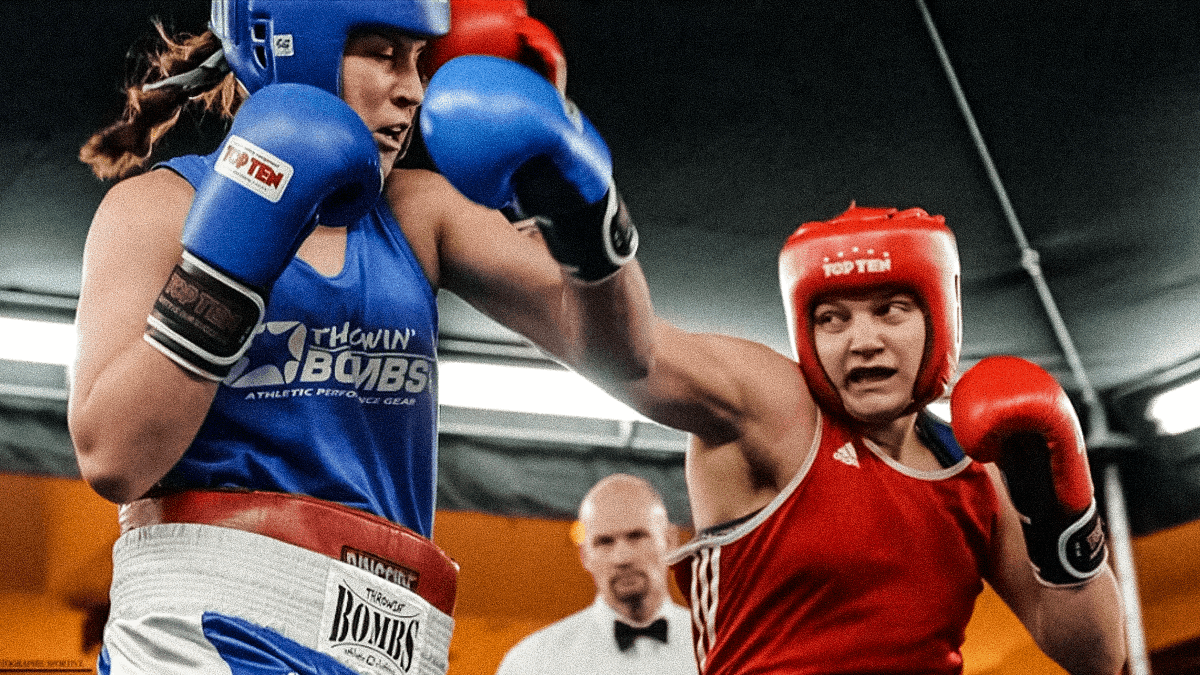
Photo: IG – Ariane Fortin
Ofori vs Carcamo: the essence of “styles make fights”
For her, the most exciting fight was the 80 kg semifinal between Josh Ofori and Umar Carcamo:
“It’s exactly for fights like that that the saying styles make fights exists!”
She describes an explosive, raw Ofori, almost Lemieux-like in power, facing a smaller-for-the-division Carcamo, brilliant, mentally unbreakable, and dangerous through volume.
A clash of completely different philosophies, and one of the most captivating duels of the tournament.
Danielle Bouchard: an architect of development
Ariane insisted on highlighting something only people inside the system truly notice:
the work of Danielle Bouchard, who trained two new national champions this year, Rachel Bourdon (65 kg) and Maeva Monteglio (70 kg).
“Danielle brings so much to the program. Seeing two of her athletes reach the top step this year is meaningful.”
Essential and well-deserved recognition for one of the country’s most consistent builders.

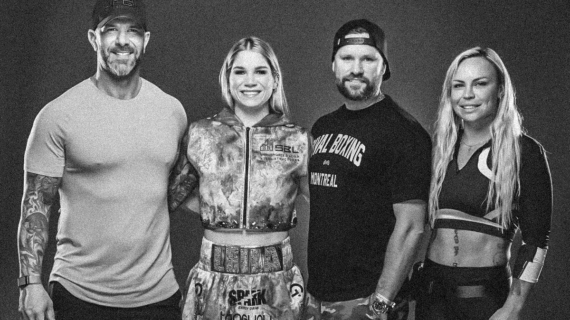
Photo: Kim Clavel et Danielle Bouchard
The return of Tammara Thibeault: an inspiring figure who adjusts and adapts
Ariane also celebrated the return of Tammara Thibeault to the circuit:
“Tammara is an example for so many amateurs.”
She reminds us that as a professional, Thibeault had to change her pacing, adapt her style, and navigate the differences of the Olympic format. Despite that, she stopped her semifinal opponent, then defeated Viktoria Penney, 4th in the world, in the final.
A convincing return… and above all, an inspiring one.
Raw potential, youth… and patience
Finally, Ariane sees in this generation tremendous potential… but still maturing:
“We have very young athletes. Still ‘green’ internationally, but very promising for upcoming Olympic cycles.”
A viewpoint that fits perfectly with Auclair’s and El Mais’s analyses:
the talent is there, but it must be developed intelligently.
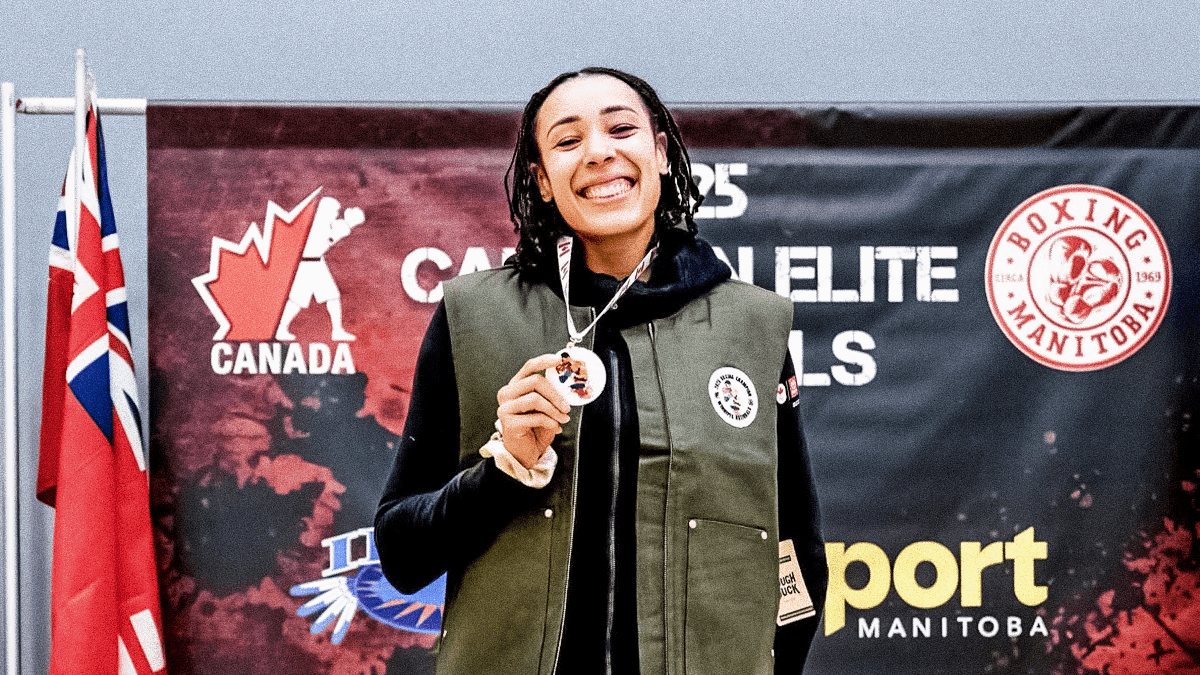
Photo: IG – Tammara Thibeault
Three visions, one conclusion: Canada is moving forward
Combining the perspectives of Auclair, Fortin, and El Mais, a very clear picture emerges:
• The program is gaining structure.
• The categories are gaining depth.
• The young athletes are gaining experience.
• And the national team now focuses on intelligent development rather than simple annual selection.
It’s no longer just: “Win your national title and we’ll see.”
It’s become: “Where are you in your development, and how do we bring you to the next level?”
Under Vincent Auclair’s leadership, supported by coaches like Ariane Fortin and Samir El Mais, Canada is moving toward a modern philosophy:
more structure, more precision, more depth — and above all, more boxers capable of delivering on the international stage.
Brief overview of our champions:
Women
48 kg – Nyousha Nakhjiri: winning return after a stint as a pro; instant depth in a historically thin category.
51 kg – Mckenzie Wright: Pan Am veteran confirms her status.
54 kg – Scarlett Delgado: one fight away from qualification last cycle; already focused on 2028.
57 kg – Marie Al Ahmadieh: raw talent, consistent dominance, huge potential.
60 kg – Shauna O’Callaghan: excellent at range; Alessia Mansuetto was absent (injury), but both will be developed in parallel.
65 kg – Rachel Bourdon: noticeable progression; performed when it mattered.
70 kg – Maeva Monteglio: successful weight drop, exemplary use of reach.
75 kg – Tammara Thibeault: confirms her reign; gradual return toward Olympic objectives. Viktoria Penney, finalist, will also continue to travel thanks to her international results.
Men
50 kg – Isaiah Rock: precision, counterpunching, promising youth.
55 kg – Max Tomines: new weight, new momentum; Turbide also one to watch.
60 kg – Fazayl Rakhimov: pressure and volume; Keoma Ali Al Ahmadieh also remains on the team after his world Top 8.
65 kg – Gabriel Aly: confirmed rise; spectacular final against Yacine Benaoudia.
70 kg – Vincent Santoriello: major progression; awaited return of Kuwardeep Manu after injury.
75 kg – Parminder Pannu: 2023 junior continental champion; remarkable footwork.
80 kg – Josh Ofori: moved up in weight, fast hands; the final against Umar Carcamo is a turning point.
85 kg – Emmanuel Envyi: athletic, still developing.
90 kg – Bryan Colwell: adds another championship to his collection.
90+ kg – Brayden Horcoff: constant pressure, repeated surprises.